

Walking the Veins of Taipei with Fly by Knight Design: Daniel Huang and Kyle Ryu, Companions on the Martial Path
同行者4:流浪者之歌
「夜奔北京」是曾經開在北京胡同里的四合院民宿,民宿老闆黃鴻璽曾經擔任過雲門舞集的武術老師,自中學起就學習中國武術,後追隨武術家徐紀先生習藝。2011年,29歲的黃鴻璽決定自台灣往大陸北方發展,賣掉在台北的房子,在北京開了客棧。
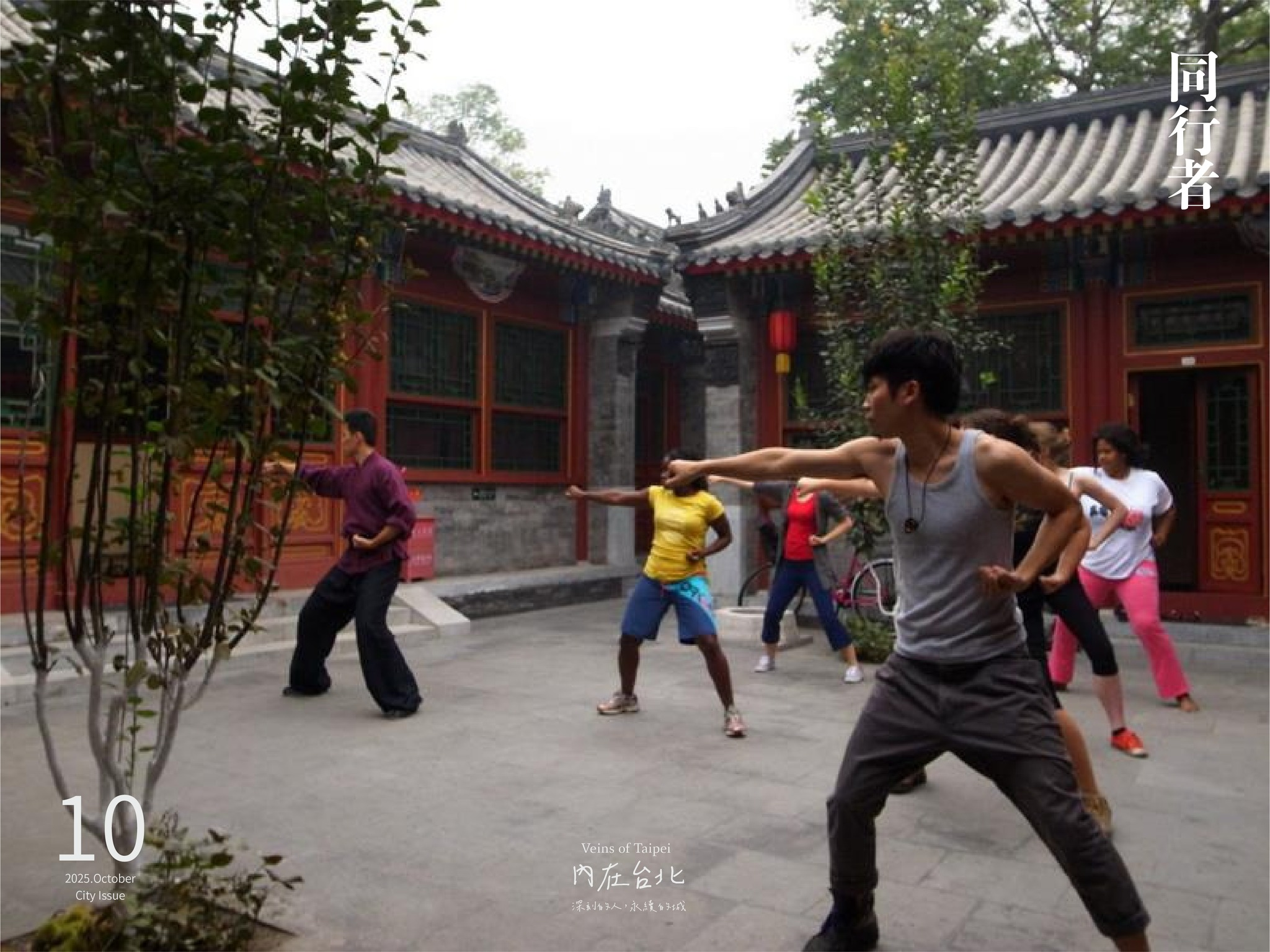
這家客棧開在距離北京王府井十幾分鐘的衚衕里。其中一個特點是客棧的員工和客人都學習武術。先從基本的十路彈腿學起,後來陸續吸引各方武林高手來獻藝,切磋,教拳可以換住宿。客棧也同步推出打工換宿計劃。
一時間,「夜奔北京」逐漸成為「衚衕裡的神祕客棧,超越門派的武術大觀園」。
在「夜奔北京」,黃鴻璽向劉少凱介紹了他此前的「流浪生涯」——當年他申請到雲門舞集的流浪者計畫,一路在中國北方拜訪武術家們。隨徐紀老師學習北方長拳的他,正是因為這段「流浪生涯」決定走出人生的舒適區,在人生地不熟的北京開客棧。
同樣作為背包旅行者,劉少凱被黃鴻璽的流浪故事打動。
這是為他們此後同行,一起探索武道文創埋下了伏筆。
兩位喜歡流浪的探索者,會碰出怎樣的火花,奏響什麼樣的流浪者之歌?
Walking the Veins of Taipei with Fly by Knight Design: Daniel Huang and Kyle Ryu, Companions on the Martial Path
In 2011, during the interval between completing his master’s degree and beginning his military service, backpacker Kyle Ryu found himself wandering through Beijing, where he was drawn to a hostel called Fly by Knight Courtyard Beijing.
Little did he know that eleven years later, he would become a fellow traveler of its founder, Daniel Huang, joining him in building the brand universe of Fly by Knight Design.
Fly by Knight Courtyard Beijing was a traditional courtyard hostel located in one of Beijing’s hutongs. Its owner, Daniel Huang, had once taught martial arts at Cloud Gate Dance Theatre. He began studying Chinese martial arts in secondary school and later trained under martial artist Adam Hsu. In 2011, at the age of twenty-nine, Daniel decided to leave Taiwan and pursue a new path in northern China. He sold his apartment in Taipei and opened the hostel in Beijing.
The hostel was situated in a hutong just over ten minutes from Wangfujing. One of its defining features was that both its staff and guests practiced martial arts. They began with the fundamentals of the Ten-Road Tantui, or “Springing Legs.” Over time, martial artists from many different traditions came to demonstrate their skills, exchange techniques, and teach. Guests could even trade martial arts instruction for accommodation. The hostel also launched a work-exchange program.
Before long, Fly by Knight Courtyard Beijing became known as “a mysterious hostel hidden in the hutongs—a martial arts wonderland transcending the boundaries between schools.”
Two Taiwanese Wanderers Meet on the Rooftops of a Beijing Courtyard
Kyle studied cosmeceutical science at China Medical University and conducted nanobiomedical research in graduate school. He had the disposition of a scientist. Yet while growing up, he also encountered several teachers and was exposed from an early age to many forms of physical therapy and healing, including bone setting and therapeutic massage, structural and energetic alignment, and concepts and methods involving fascia and the circulation of qi.
At Fly by Knight Courtyard Beijing, Daniel told Kyle about his earlier years of wandering. Daniel had received a grant through Cloud Gate’s Wanderer Project, which enabled him to travel across northern China and visit martial arts masters. Having studied northern long fist under Adam Hsu, he was inspired by this journey to step outside his comfort zone and open a hostel in Beijing, a city where he knew almost no one.
Looking back years later, Daniel admitted that there had been another reason: “My teacher’s demands were so rigorous that I couldn’t take it anymore. I wanted to escape.”
Chinese martial arts are vast and profound. To help Daniel truly master them, Adam Hsu placed strict demands on his fundamentals, forms, and practical applications. He also took Daniel to the theater and to concerts so that he could understand martial arts from a cultural perspective. All of these experiences would later become an inexhaustible source of inspiration for Fly by Knight Design.
As a fellow backpacker, Kyle was deeply moved by Daniel’s stories of wandering.
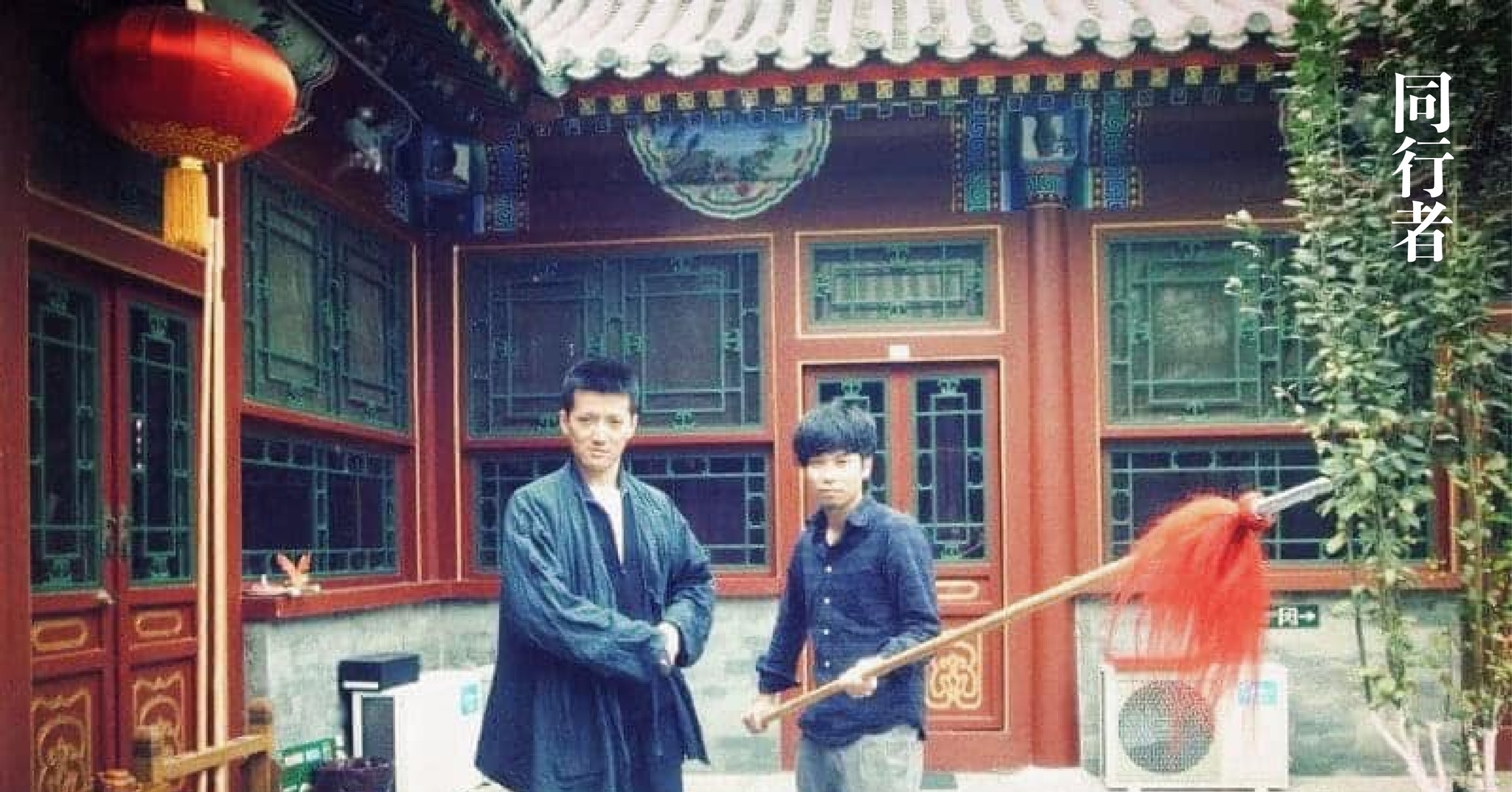
Early on the morning after checking in, Kyle joined Daniel and a group of international guests in practicing martial arts in the courtyard. When they finished, they climbed onto the roof beams and looked out over the city of Beijing.
2011: Kyle Ryu and Daniel Huang at Fly by Knight Courtyard Beijing. Photo courtesy of Kyle Ryu.
Perhaps neither of them realized that their meeting on the rooftop would become a secret signal of sorts, foreshadowing their eventual reunion. From that moment onward, the idea of the xia—the chivalrous martial hero—began to take root in Kyle’s mind. For the first time, he realized just how compelling martial arts could be. These experiences would later become part of the DNA of Fly by Knight Design’s brand universe.
Before Kyle left Beijing, Daniel took him to eat traditional Beijing hot pot in the hutongs.
Then they went their separate ways.
Daniel’s hostel business prospered. Following Fly by Knight Courtyard Beijing, he opened Fly by Knight Pingyao Courtyard and Fly by Knight Datong Hostel. Kyle, meanwhile, continued wandering and exploring the world, traveling to Japan, Europe, South America, and North America. Along the way, he took Taiwanese brands to international exhibitions and promoted Taiwanese culture around the world. While gaining experience in start-ups, he also studied Taoist health and self-cultivation practices under his own master.
2011: Kyle Ryu and Daniel Huang at Fly by Knight Courtyard Beijing. Photo courtesy of Kyle Ryu.
In 2019, the pendulum of the world was dramatically slowed by the spread of COVID-19. Affected by the pandemic, Daniel closed Fly by Knight Courtyard Beijing and returned to Taiwan to contemplate what should come next.
After the hostel closed, memories of Fly by Knight Courtyard Beijing—and of all the guests who had passed through its doors—rose to the surface. Daniel began writing down their stories. At the same time, the Tantui trousers and Tongming-button clothing collections that he had been developing for years gradually took shape. The apparel project proved enormously popular on an American crowdfunding platform. Its success gave Daniel a much-needed boost of confidence, inspiring him to draw upon the resources and experiences accumulated through Fly by Knight Courtyard Beijing and begin again by founding Fly by Knight Design.
Ever since they parted in Beijing, Kyle had continued to follow Daniel and the development of Fly by Knight.
Thus, when Daniel invited Kyle in 2022 to join Fly by Knight Design—the brand that had grown out of Fly by Knight Courtyard Beijing—as co-founder and brand director, Kyle accepted immediately.
The Tongming-button clothing collection by Fly by Knight Design. Photo courtesy of Kyle Ryu.
The two were reunited, this time as fellow travelers.
Daniel designed the Tantui trousers and Tongming-button clothing specifically for martial arts practitioners. Practical and elegant, the garments embody his philosophy that “every gesture and movement is born for martial arts.” Their design is rooted in the Chinese understanding of the body that Daniel encountered through the northern long-fist tradition taught by Adam Hsu.
For example, rather than relying on standardized Western sizing labels such as S, M, L, and XL, he uses the categories of Heaven, Earth, and Humanity. Other garments are named after the forms and movements of the dragon, tiger, and sparrowhawk.
After joining the company, Kyle observed a physical-training program that Daniel had developed for an experimental elementary school. He immediately exclaimed, “Why not offer this course to adults as well?”
Perhaps it reminded them both of the days when they practiced martial arts together in that Beijing courtyard.
2011: Daniel Huang at Fly by Knight Courtyard Beijing. Photo courtesy of Kyle Ryu.
Reunited as Fellow Travelers in Taipei’s Dadaocheng
From then on, Fly by Knight Design began offering its own martial arts experiences alongside its clothing collections. Classes were introduced in the Ten-Road Tantui, Pigua Palm, and Ambush Fist. As the martial arts program took shape, the clothing also received widespread acclaim. The brand was invited to open pop-up experience stores at Eslite in Taipei, Hayashi Department Store in Tainan, and locations in Kyoto.
In December 2024, Fly by Knight Design opened a permanent store in Taipei’s Dadaocheng district. In addition to clothing, it sells hand-stitched notebooks, teacups, herbal bath sachets, and martial arts experiences.
Chinese martial arts—and the Chinese understanding of the body that Daniel holds so close to his heart—can be found throughout the brand’s products. Indeed, the immense cultural treasury of Chinese martial arts is the source from which everything at Fly by Knight Design emerges.
A Chinese martial arts experience offered by Fly by Knight Design in Dadaocheng. Photo courtesy of Kyle Ryu.
Kyle regards Chinese martial arts as a form of preventive medicine. From the perspective of health and wellness, using martial arts to regulate and improve one’s physical condition can indeed be seen as a sophisticated form of preventive care.
His previous branding experience helped him recognize the value of Fly by Knight Design’s martial arts foundations. Together with Daniel, he is now seeking to build a new worldview and ecosystem around traditional martial arts.
The brand’s physical space in Dadaocheng offers clothing that serves as a second skin for the body, herbal bath sachets designed for use after exercise, and incense formulated for different seasons and different parts of the body. Kyle is attempting to construct Fly by Knight Design as a complete sensory experience, transforming the ancient practice of Chinese martial arts into something contemporary and fashionable.
A conceptual illustration of Kyle Ryu’s attempt to integrate different forms of physical training and self-cultivation. Image courtesy of Kyle Ryu.
During the interview, Kyle spoke of a concept he calls “the movement of aesthetic endeavor.”
“Aesthetic sensibility is the emotional response produced by accumulated knowledge,” he explained. “The depth of one’s aesthetic sensibility depends on the depth of one’s knowledge. The great treasury of martial arts contains an extraordinary wealth of knowledge, so we have been able to uncover many things within it. We begin with ourselves—making beautiful clothes and opening a remarkable store—and gradually awaken more fellow travelers to join us in this endeavor.”
Daniel understands that Chinese martial arts constitute an immense cultural treasury. Although they are gradually declining, he remains confident about their future. On the one hand, he fully embraces the joy of martial arts and the profound dialogue they create between body, mind, and spirit. On the other, he believes that Chinese martial arts will one day achieve worldwide popularity, just as yoga—an ancient Indian practice of self-cultivation—has done.
“We are willing to take the first step and become the explorers,” Daniel said.
The Fly by Knight Design flagship store in Dadaocheng. Photo courtesy of Kyle Ryu.
Perhaps it was precisely Daniel’s courage to explore that moved Kyle. Looking back on the moment more than a decade ago when they stood together on the roof beams of a Beijing courtyard, Kyle may once again feel the bold spirit of those who venture ahead.
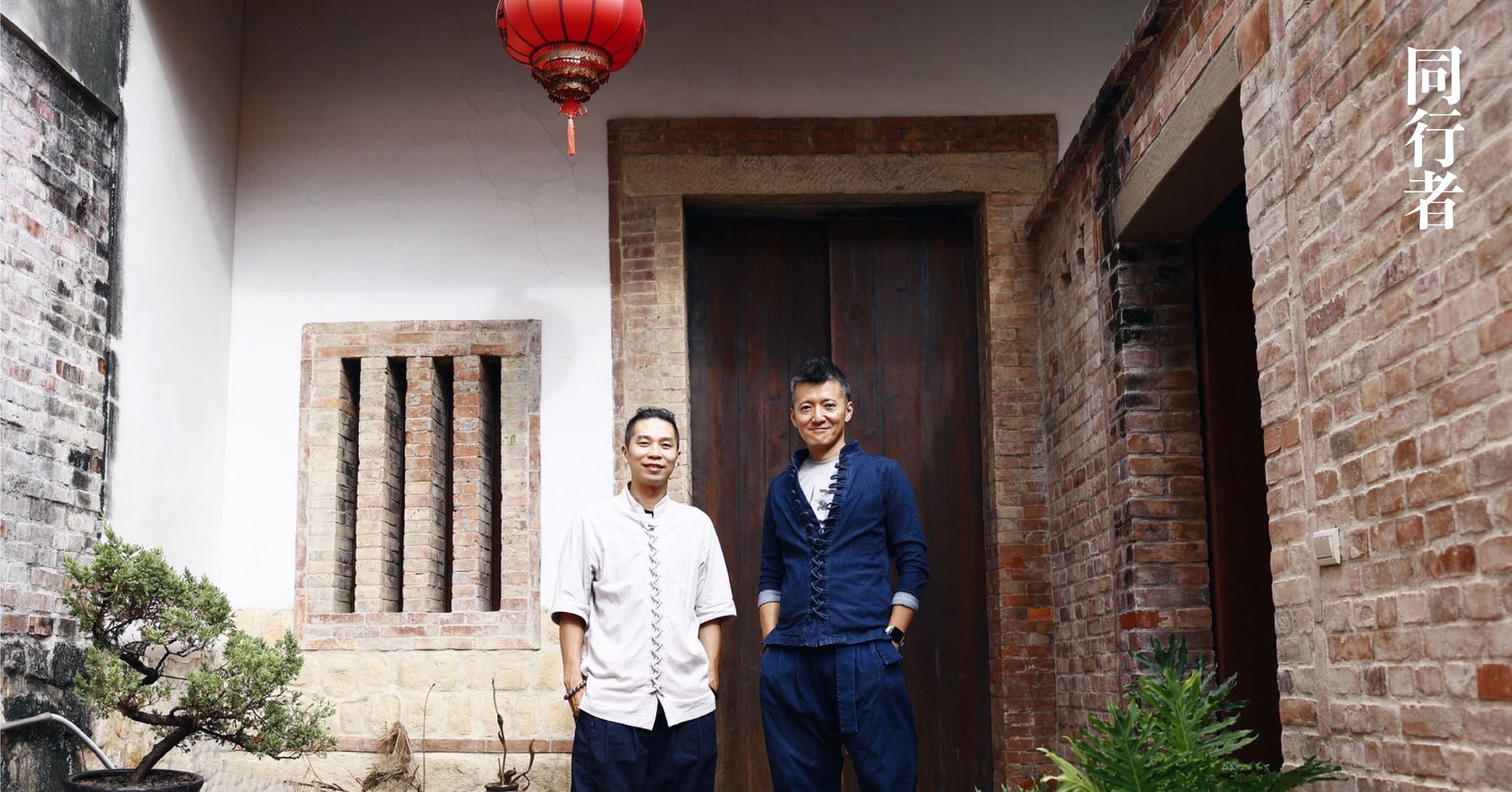
On December 15, 2024, the Fly by Knight Design flagship store opened in Taipei’s Dadaocheng district. Kyle specially prepared red lanterns resembling those once used at Fly by Knight Courtyard Beijing, along with old wooden doors and other related elements. He and Daniel met beneath the roof beams once again. Unlike thirteen years before, however, the sky they now saw was the sky over Taipei.
Going forward, they plan to draw upon the embodied knowledge contained within Chinese martial arts to pursue a new aesthetic vision and construct new rituals for everyday life. They are ready to continue as explorers, “not in pursuit of nostalgia, but in search of what is real.”
After all these years, Kyle Ryu and Daniel Huang have finally become fellow travelers on the martial path. At the same time, they are welcoming and calling forth others to join them as they continue exploring the possibilities of the body and new ways of living.